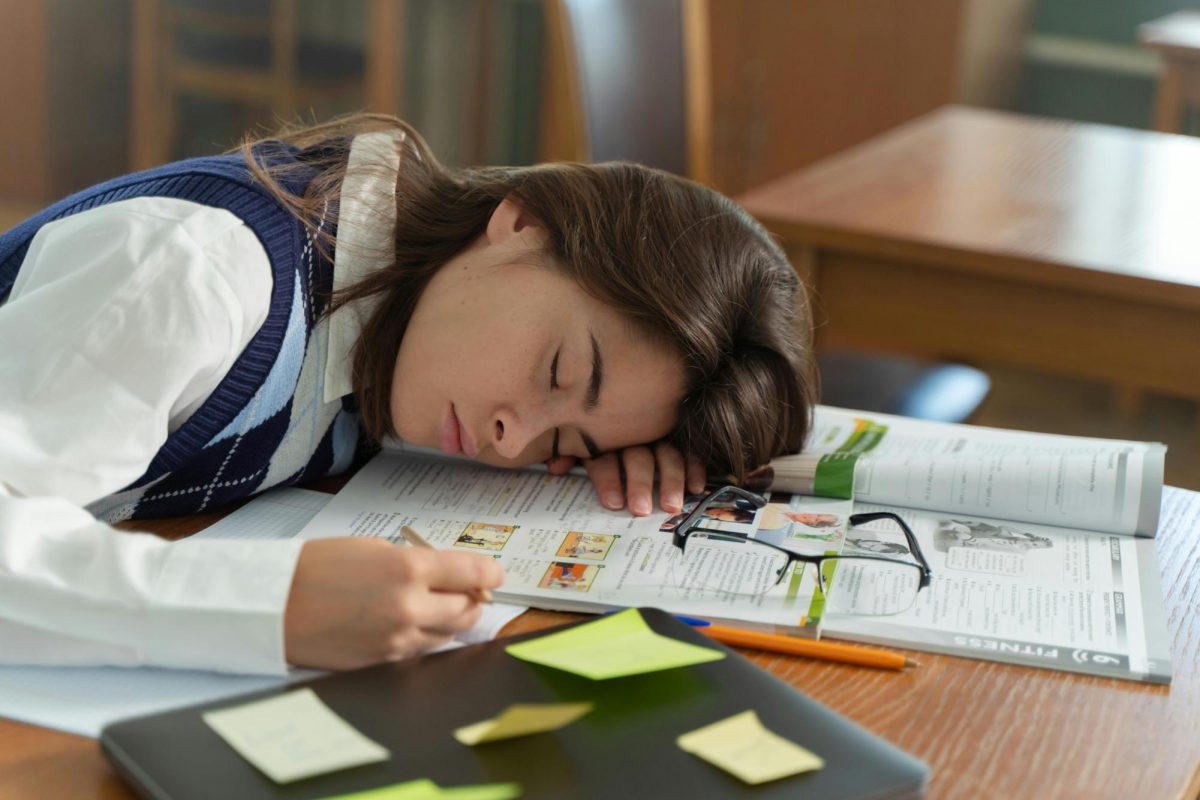
By the time the first bell rings, many high school students are already running on empty. Despite growing awareness around mental health, sleep deprivation remains a widespread issue among teenagers, fueled by academic pressure, extracurricular commitments, screen time, and early school start times.
According to the Centers for Disease Control and Prevention, teenagers need between eight and ten hours of sleep per night, yet more than 70 percent of high school students report getting less than eight hours on school nights. The consequences go beyond feeling tired in class. Lack of sleep has been linked to decreased academic performance, increased anxiety and depression, and difficulty concentrating.
At Nashoba Regional High School, students say packed schedules are a major reason sleep often comes last. “Between homework, sports, and my job, I usually don’t go to bed until after midnight,” senior Chiana Bravo said. “Even if I want to sleep earlier, it feels impossible to fit everything in.”
Many students describe a similar routine. They attend practice or rehearsal after school, eat dinner quickly, then spend hours completing assignments. Some head to part time jobs before coming home to start their homework. Senior Grace Guthrie, who plays varsity soccer, said balancing academics and athletics can be overwhelming. “By the time I get home and start my homework, it is already late,” she shared. “If I have a big assignment or test, I am staying up to finish it. There is not really another option.”
For upperclassmen, college applications and Advanced Placement courses add another layer of pressure. Heavier course loads often mean longer nights. While involvement in activities is encouraged, students say the combined expectations can feel nonstop. Several students admitted that sleep is usually the first thing they sacrifice when deadlines pile up.
Phones and social media also play a major role. While technology helps students stay connected it often interferes with sleep. Research from the Sleep Foundation shows that blue light from screens can delay the release of melatonin, the hormone that helps regulate sleep, making it harder for teens to fall asleep even after putting their phones away.
Technology also plays a role. Phones and laptops are necessary for schoolwork, but they can easily turn to distractions. Senior Dulcie Chrystall-Dubois said that even when she plans to sleep earlier, it does not always happen: “I will go on my phone to relax after homework, and then I lose track of time, the next morning I regret it.” Some students struggle to stay focused during early morning periods, while others rely on coffee or energy drinks to stay alert. Over time, that pattern can become routine, leading them to become tardy to school should there be traffic or a long line at the local coffee shop in the morning.
While early school start times are often discussed in broader conversations, students say that changing the clock alone would not fix everything. The larger issue may be the pressure to do it all. Many teens feel they must succeed academically, stay involved, work, and maintain a social life at the same time. Some experts argue that early start times worsen the problem. The American Academy of Pediatrics recommends that middle and high schools start no earlier than 8:30 in the morning, citing research that teens’ biological clocks are naturally wired to fall asleep and wake up later . However, many schools still begin well before that time.
As Nashoba students juggle these responsibilities, sleep often becomes an afterthought. The challenge is not simply getting to bed earlier. It is finding balance in a culture that rewards constant productivity. For a community that values achievement, recognizing the importance of rest may be an important step forward.