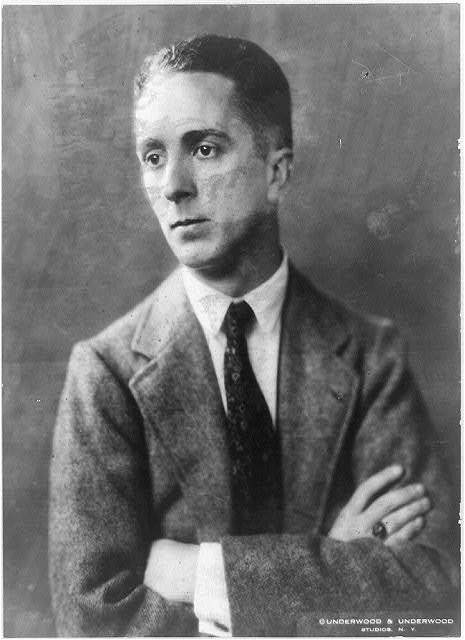
Norman Rockwell was an American artist known for creating artwork that not only admired American life but also challenged it. He painted artwork that focused on the highlights of everyday life in America as well as war, civil rights, and poverty. As one of the most influential American artists, he received the Presidential Medal of Freedom; his work has been posted in the White House, and he is remembered lovingly by many.
Norman Perceval Rockwell was born to Jarvis and Anne Rockwell on the third of February, 1894 in New York. He had an older brother named Jarvis after his father and spent the entirety of his childhood in New York. At the age of 14, he enrolled in the New York School of Art and two years later he began to study at the National Academy of Design. Finally, he transferred to the Art Studies League in Manhattan, where he would go on to meet some of his mentors such as Thomas Fogarty and George Bridgman. Upon graduating, Rockwell quickly found a job as an artist for the Boys Life Magazine, which was the official Boy Scouts magazine. Although Rockwell did not work there throughout his life, he still continued to illustrate for the Boy Scouts. After working at Boys Life he began to work for the Saturday Evening Post at the age of 22 and this marked the beginning of a 47 year career with them as he went on to make the first 321 covers for the magazine.
For the first many years of his career while working for the Saturday Evening Post, Rockwell painted images that depicted the joys of American life. Of this he said, “Maybe as I grew up and found out the world wasn’t the perfect place I had thought it to be, I unconsciously decided that if it wasn’t an ideal world, it should be, and so painted only the ideal aspects of it.” However, while he spent a lot of time focusing on lighter concepts he also tackled larger ones with his Four Freedom’s paintings. These pieces were inspired by the speech Franklin D. Roosevelt gave to Congress right before the start of World War ll and was meant to acknowledge the freedoms that Americans often take for granted. These images were titled Freedom of Speech, Freedom of Worship, Freedom from Want, and Freedom from Fear, respectively. Though they were simple depictions ( a man standing up in front of a group, people praying, a Thanksgiving dinner, and parents putting their children to bed), they had a profound impact.
Rockwell wanted to bring to light more than just war time ideals but also social realities, which would lead to the end of his affiliation with the Saturday Evening Post and his transition to Look magazine. At his former magazine, Rockwell was not allowed to include people of color as main characters of his paintings. This meant he could only include them as porters, laborers, or maids. Because of the growing Civil Rights movement at the time, these restrictions made him feel stuck. However, in his journal he wrote, “If necessary, I must die doing something worthwhile. A worthy end, not humiliating fear and groveling.” Shortly after, Rockwell stopped working for the Saturday Evening Post and began his affiliation with Look Magazine on the basis of being able to have complete freedom to choose the subject matter. His first painting for them was The Problem We All Live With, which showcased Ruby Bridges being escorted to a newly desegregated school.
Over the last ten years of his life and his time with Look magazine, Rockwell continued to paint about themes including race, poverty, and government along with lighter topics too. Some of his most famous paintings from this time are The Right to Know, The Longest Step, Murder in Mississippi and The Peace Corps (JFK’s Bold Legacy). He also continued to paint for the Boy Scouts of America; by this time he was in his eighties and his last commission for them was a calendar. In 1977 he received the Presidential Medal of Freedom for his World War ll posters. He died in his Stockbridge, Massachusetts home at the age of 84 in 1978.
He once said, “I was showing the America I knew and observed to others who might not have noticed. My fundamental purpose is to interpret the typical American. I am a story teller.” Rockwell stayed true to this throughout his lifetime by painting happy moments, sad moments, proud moments, and disgraceful ones. All of this allowed him to give an accurate portrayal of who people are, the way they live, and the things they go through.